The Allegheny Mountains are home to some of the most challenging whitewater kayaking in the eastern United States. Hidden among steep valleys, forested mountains, and remote wilderness, Class V rivers and rapids offer experienced paddlers powerful currents, technical lines, waterfalls, drops, and unpredictable conditions. These runs are not suitable for beginners and can demand advanced boat control, precise scouting, strong rescue skills, and extensive experience in high-volume whitewater. For expert kayakers looking for demanding wilderness adventures, the Alleghenies provide an exciting collection of extreme whitewater destinations to explore.
West Virginia
Upper Gauley River — Summersville / Fayetteville

The Upper Gauley River is world-renowned as a premier Class V whitewater run, famous for its intense, continuous drops and powerful volume. Dropping over 335 feet across its 12-mile stretch, the river features iconic, high-consequence rapids like Insignificant, Pillow Rock, Lost Paddle, and Sweet’s Falls. Set against the dramatic backdrop of the Appalachian wilderness, the canyon creates a remote, high-energy environment where precise navigation and quick decision-making are essential. Scheduled dam releases from Summersville Dam create reliable, massive flows that attract expert paddlers from across the globe.
Quick Facts: Location: Near Summersville / Fayetteville | Class Rapids: Class IV–V+ | Difficulty: Expert | River Type: Big-volume pool-drop canyon river | Best Season: Autumn (Gauley Season dam releases in September and October)
Where to Stay: Fayetteville and Summersville serve as primary hubs, offering a wide array of resort cabins, local campgrounds, vacation rentals, and outfitters. Additional lodging and dining options are available along the Route 19 corridor.
Lower Meadow River — Nallen / Mount Lookout

The Lower Meadow River delivers an uncompromising, extremely technical Class V+ whitewater experience through a narrow, boulder-strewn canyon. Characterized by steep gradients, tight slots, massive undercut rocks, and continuous technical drops, this river demands relentless precision and expert boat handling. The river’s character changes drastically with fluctuating water levels, requiring meticulous scouting and a deep understanding of small-volume creeking dynamics. Its isolated, primitive canyon setting adds to the sense of commitment and high consequence for every run.
Quick Facts: Location: Near Nallen / Mount Lookout | Class Rapids: Class IV–V+ | Difficulty: Expert | River Type: Steep, technical boulder-bashing creek | Best Season: Spring rain events and late summer/fall releases from local watersheds
Where to Stay: Mount Lookout and nearby Fayetteville provide the most convenient access to lodging, rustic cabins, and established campgrounds. Visitors can also find gear shops, dining, and outdoor services concentrated around the New River Gorge region.
Blackwater River — Davis / Tucker County

The Blackwater River cuts through the high-elevation terrain of Tucker County, flowing through a scenic, heavily forested gorge known for its dark, tannin-stained waters. Featuring technical Class IV–V rapids, the river combines steep drops, tight boulder slaloms, and fast-moving chute features that test a paddler’s reaction speed and edge control. The surrounding canyon landscape offers stunning Appalachian scenery, but steep canyon walls mean portaging and extrication can be exceptionally difficult. River flows depend heavily on natural precipitation and snowmelt, creating brief but thrilling windows for local paddlers.
Quick Facts: Location: Near Davis / Tucker County | Class Rapids: Class III–V (depending on section) | Difficulty: Advanced to Expert | River Type: High-elevation mountain river / steep creek | Best Season: Early spring snowmelt and heavy rainfall events
Where to Stay: Davis and neighboring Thomas offer charming mountain-town lodging, cozy bed-and-breakfasts, local breweries, and vacation rentals. Blackwater Falls State Park also provides cabin rentals, a lodge, and forested campsites.
Cheat Canyon — Parsons / Albright

The Cheat Canyon offers a wild, remote Class IV whitewater journey through a deep, undeveloped gorge in northeastern West Virginia. Spanning over 13 miles, the run features more than a dozen major rapids, including Decision, Coliseum, and Pete Morgan, set amidst massive boulder fields and powerful wave trains. Because the Cheat is a free-flowing river system, its water levels fluctuate dramatically based on seasonal weather, ranging from technical low-water moves to massive high-water waves. The canyon’s wilderness isolation ensures a true wilderness expedition feel, far removed from major roads and urban infrastructure.
Quick Facts: Location: Near Parsons / Albright | Class Rapids: Class III–IV+ | Difficulty: Advanced | River Type: Free-flowing wilderness canyon river | Best Season: Spring (March through May) during peak snowmelt and spring rains
Where to Stay: Albright and Kingwood offer local campgrounds and basic lodging, while nearby Morgantown provides extensive hotel options, dining, and gear suppliers. Primitive camping is also available along public lands in the surrounding watershed.
Tygart Valley River — Grafton / Philippi

The Tygart Valley River features diverse whitewater stretches, highlighted by the high-stakes Class IV–V Tygart Gorge section between Belington and Philippi. The gorge presents continuous boulder gardens, powerful ledge drops, and heavy hydraulics that demand precise line choice and solid technical skills. High granite cliffs and dense forest line the river banks, isolating paddlers in a rugged mountain setting. Flows are largely dependent on upstream rainfall and reservoir releases, making timing key for catching optimal paddling conditions.
Quick Facts: Location: Near Grafton / Philippi | Class Rapids: Class III–V (section dependent) | Difficulty: Intermediate to Expert | River Type: Pool-and-ledge mountain river | Best Season: Spring through early summer, plus autumn rainfall events
Where to Stay: Grafton and Philippi offer local motels, historic inns, and quick access to Tygart Lake State Park, which features full-hookup campsites, cabins, and lodge accommodation. Additional lodging and amenities can be found in nearby Fairmont.
Big Sandy Creek — Bruceton Mills / Kingwood

Big Sandy Creek is a legendary Class IV–V creeking run celebrated for its clean ledge drops, technical slot moves, and famous rapids like Wonder Falls and Big Falls. Flowing through a secluded sandstone gorge, the creek offers a classic eastern creeking experience with crisp, clear water and rapid-fire drop-pool sequences. Paddlers must navigate tight squeezes, pin hazards, and sticky holes that require precise timing and strong boofing technique. Because it relies entirely on natural runoff, catching the Big Sandy at prime flows requires careful monitoring of local rainfall.
Quick Facts: Location: Near Bruceton Mills / Kingwood | Class Rapids: Class IV–V | Difficulty: Expert | River Type: Steep sandstone creek / ledge-drop river | Best Season: Spring rainfall and winter/early spring thaws
Where to Stay: Bruceton Mills and Kingwood feature nearby private campgrounds, rustic cabins, and local inns. Its proximity to Interstate 68 also makes Morgantown a convenient base camp for lodging, dining, and gear shops.
New River Gorge — Fayetteville / Lansing

The Lower New River Gorge is an iconic, high-volume whitewater run that cuts through one of the oldest river canyons in the world. Characterized by massive wave trains, towering hydraulic features, and huge room-to-maneuver pools, the river packs legendary rapids like Miller’s Folly, Fayette Station, and The Jaw. The sheer scale of the gorge, framed by dramatic sandstone cliffs and the famous New River Gorge Bridge, makes every descent visually breathtaking. Accessible to a wider range of skill levels than the nearby Gauley, it offers world-class commercial rafting and private paddling opportunities nearly year-round.
Quick Facts: Location: Near Fayetteville / Lansing | Class Rapids: Class III–IV+ | Difficulty: Intermediate to Advanced | River Type: Large-volume pool-drop canyon river | Best Season: Spring through autumn (reliable flows all season)
Where to Stay: Fayetteville is the vibrant hub of the New River Gorge National Park area, packed with outdoor outfitters, campgrounds, cabin rentals, and local eateries. Additional hotels and national park visitor facilities are located along US Route 19 and near Lansing.
Here are both entries in the same format, with the requested bolding: Upper Youghiogheny River — Friendsville / Garrett County
Maryland
Upper Youghiogheny River — Friendsville / Garrett County

Mountain river rushing through a deeply wooded gorge surrounded by rugged hills and steep forested slopes.
The Upper Youghiogheny is one of the Mid-Atlantic’s premier whitewater destinations, with continuous rapids, ledges, drops, and technical channels that become increasingly demanding downstream.
The most challenging sections feature Class IV–V whitewater, including powerful rapids and complex lines that require strong boat control, precise maneuvering, and experience with high-volume technical rivers.
Releases from Deep Creek Lake help provide dependable boating flows, making the river particularly popular with experienced paddlers during scheduled release periods.
Quick Facts: Location: Near Friendsville / Garrett County, Maryland | Class Rapids: Up to Class V | Difficulty: Advanced to Expert | River Type: Steep gorge river / technical whitewater | Best Season: Spring through fall, especially during scheduled releases
Where to Stay: Friendsville is the primary base for paddlers visiting the Upper Youghiogheny, with restaurants, lodging, camping, and easy access to the river corridor. Oakland and McHenry provide additional lodging, dining, and outdoor recreation options within Garrett County. Camping is also available at several locations around Deep Creek Lake and the surrounding public lands. Youghiogheny River Gorge — Garrett County
Youghiogheny River Gorge — Garrett County

The Youghiogheny River cuts through a spectacular forested gorge filled with steep cliffs, rocky outcrops, and densely wooded mountain slopes.
The gorge contains a variety of whitewater sections, with rapids ranging from moderate Class II–III water to more demanding Class IV and Class V terrain on the Upper Youghiogheny.
Paddlers encounter narrow channels, ledges, waves, holes, and technical rock features as the river drops through the rugged Appalachian landscape.
The surrounding gorge also offers excellent opportunities for hiking, fishing, camping, wildlife viewing, and scenic exploration outside of the whitewater season.
Quick Facts: Location: Garrett County, Maryland | Class Rapids: Class II–V, depending on section | Difficulty: Intermediate to Expert | River Type: Appalachian gorge river / mixed whitewater | Best Season: Spring through fall, depending on section and water releases
Where to Stay: Friendsville is one of the best bases for exploring the Youghiogheny River, particularly for paddlers accessing the Upper Youghiogheny. Oakland offers additional hotels, restaurants, shops, and services throughout Garrett County. McHenry and the Deep Creek Lake area provide another convenient base for visitors combining river activities with hiking, fishing, boating, and other outdoor recreation.
Pennsylvania
Upper Youghiogheny River — Ohiopyle / Laurel Highlands

Mountain river winding through steep forested valleys, rocky gorge walls, and the rugged terrain of Pennsylvania’s Laurel Highlands.
The Upper Youghiogheny is known for challenging whitewater, with powerful rapids, ledges, drops, waves, and technical channels that demand precise boat control.
The most difficult sections reach Class IV–V, while the river’s character varies with water levels and the particular section being paddled.
The surrounding Laurel Highlands provide a scenic setting with waterfalls, hiking trails, forests, and abundant opportunities for outdoor recreation.
Quick Facts: Location: Near Ohiopyle / Laurel Highlands, Pennsylvania | Class Rapids: Up to Class V | Difficulty: Advanced to Expert | River Type: Mountain gorge river / technical whitewater | Best Season: Spring through fall, depending on water levels and releases
Where to Stay: Ohiopyle is the most convenient base for exploring the Youghiogheny River, with lodging, restaurants, outfitters, camping, and access to numerous outdoor activities. Confluence offers additional lodging and services near the river and provides easy access to the surrounding Laurel Highlands. Somerset is another practical base for visitors looking for a wider selection of hotels, restaurants, and supplies. Stonycreek River — Somerset County
Stonycreek River — Somerset County
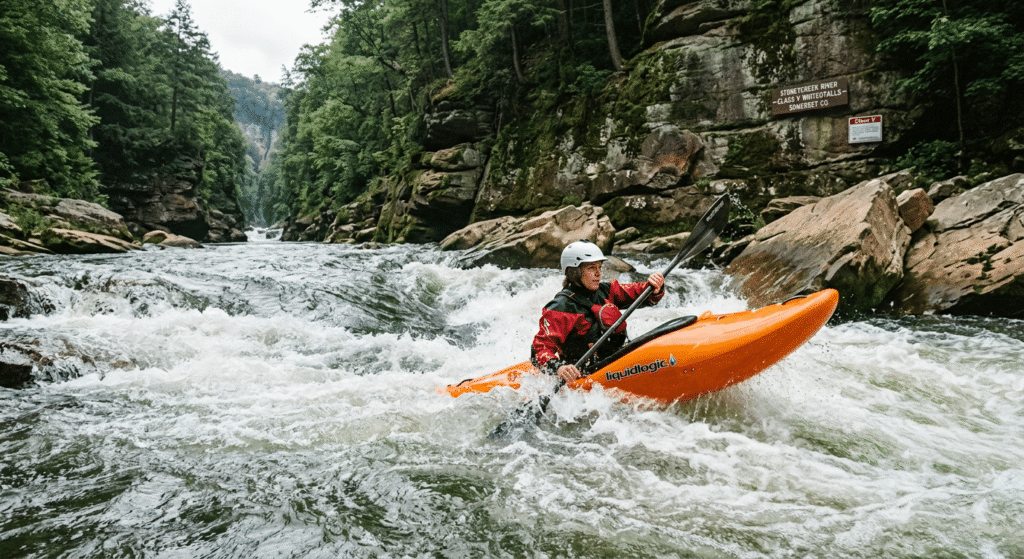
The Stonycreek River flows through a rugged Appalachian landscape of wooded hills, rocky banks, and narrow mountain valleys in southwestern Pennsylvania.
The river is best known for its whitewater sections, offering a mixture of technical rapids, waves, drops, and rocky channels that become more demanding at higher flows.
Sections of the river can reach Class III–IV difficulty, making it a popular destination for intermediate and experienced paddlers seeking a less crowded Appalachian whitewater run.
The surrounding Somerset County countryside also provides opportunities for fishing, hiking, camping, wildlife viewing, and exploring the region’s forested mountain scenery.
Quick Facts: Location: Somerset County, Pennsylvania | Class Rapids: Up to Class IV | Difficulty: Intermediate to Advanced | River Type: Appalachian mountain river / technical whitewater | Best Season: Spring and after significant rainfall
Where to Stay: Somerset is the primary base for exploring the Stonycreek River, offering hotels, restaurants, outdoor supplies, and easy access to the surrounding mountain roads. Johnstown provides another convenient option with a larger selection of lodging, dining, and services. Camping is also available throughout the surrounding forests and recreational areas for visitors who prefer a more remote base.
Conclusion
Class V whitewater kayaking in the Allegheny Mountains combines technical rapids, rugged scenery, remote river valleys, and some of the most demanding paddling conditions found in the eastern United States. The region’s rivers can change dramatically with rainfall and water levels, making scouting and careful planning essential even for highly experienced kayakers. Before attempting an extreme run, paddlers should research current conditions, understand the difficulty of the specific river, use appropriate safety equipment, and never underestimate changing water levels. For experienced whitewater kayakers, however, the Alleghenies offer unforgettable opportunities to test their skills in a spectacular mountain environment.
Frequently Asked Questions
Is there Class V whitewater kayaking in the Allegheny Mountains?
Yes. Parts of the Allegheny Mountain region contain extremely difficult whitewater that reaches Class V under appropriate water conditions. Difficulty can vary significantly depending on rainfall, flow, obstacles, and the particular section of river.
Are Allegheny Mountains Class V rivers suitable for beginners?
No. Class V whitewater is intended for highly experienced paddlers with advanced technical, scouting, and rescue skills. Beginners should start with easier whitewater and progress gradually through the difficulty levels.
What makes Class V kayaking so difficult?
Class V whitewater can combine powerful currents, steep drops, complex rapids, narrow channels, hazardous obstacles, difficult scouting, and limited opportunities for recovery. A seemingly manageable rapid can become considerably more dangerous when water levels rise.
What is the best time of year for Class V kayaking in the Allegheny Mountains?
The best season varies by river and water level. Many eastern mountain rivers depend heavily on rainfall, while others have more reliable seasonal flows. Kayakers should check current gauge readings and local conditions rather than relying solely on a calendar.
What equipment is needed for Class V whitewater kayaking?
Expert paddlers typically use a properly fitted whitewater kayak, helmet, personal flotation device, paddle, appropriate protective clothing, and safety and rescue equipment. The exact equipment should match the river, water temperature, weather, and expected conditions.
Should Class V rapids be scouted before running them?
Yes. Scouting is especially important on Class V water. Experienced paddlers should understand the rapid, identify potential hazards, determine possible lines, and establish a rescue plan before committing to a difficult section.
Can water levels change the difficulty of a Class V river?
Absolutely. Rainfall and changing river levels can dramatically alter current speed, hydraulics, obstacles, eddies, and available lines. A


Leave a Reply